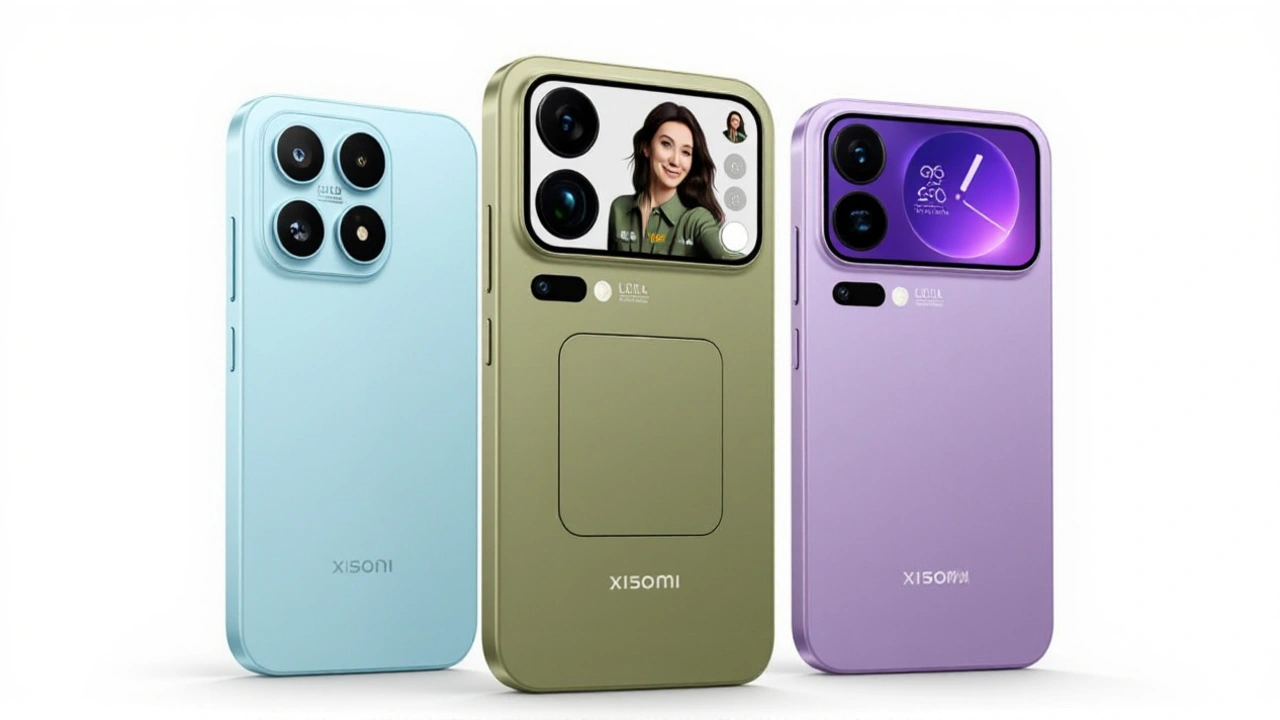
When Lu Weibing, president of Xiaomi Corporation posted on Weibo on October 2, 2025, he announced that the Xiaomi 17 lineup had already sold more than one million units in its first seven days. The milestone was reached just days after the phones rolled out in Beijing, China during Lei Jun’s annual speech on September 25, 2025. Faster than any previous generation, the demand surge forced Xiaomi to ramp up production and hinted at an even bigger splash from the soon‑to‑be‑revealed Ultra variant.
Record‑Breaking First‑Week Sales
According to the company’s internal dashboard, the three‑model family – the base Xiaomi 17, the Xiaomi 17 Pro, and the flagship Xiaomi 17 Pro Max – moved 1,021,456 units combined in the first week. That translates to roughly 145,000 units per day, a pace that dwarfs the 17 Series’ predecessor, which took 12 days to cross the same line.
Analysts at Canalys noted a 20 % year‑over‑year increase in Xiaomi’s flagship sales, pushing the brand’s share of China’s premium segment to a record 15 % in Q3 2025. The Pro Max, in particular, set a day‑one sales record, outselling Samsung’s latest Galaxy S Fold model by a margin of 2.3 to 1, according to data compiled by 9to5Google.
Specs and Design Highlights of the 17 Lineup
All three phones share the new Qualcomm Snapdragon 8 Elite Gen 5 SoC, which Xiaomi says delivers a 15 % uplift in AI processing and a 12 % boost in graphics performance over the Snapdragon 8 Gen 4. The base model ships with a 7,000 mAh silicon‑carbon battery, while the Pro Max ups that to 7,500 mAh and supports 100 W HyperCharge, promising a full charge in under 30 minutes.
Design-wise, the Pro and Pro Max revive the “secondary rear display” first seen on the Mi 11 Ultra in 2021. Instead of a tiny vertical strip, these newer screens span the full width of the back panel, showing time, notifications, and even a live‑preview of the camera viewfinder. Reviewers at Tech Maiky called the feature “a bold, almost niche‑loving move that finally feels polished enough for mainstream buyers.”
The camera stacks also get a lift: the base 17 keeps a triple‑lens array (50 MP main, 13 MP ultra‑wide, 5 MP macro), while the Pro adds a 50 MP periscope telephoto with 5× optical zoom, and the Pro Max tops out with a 108 MP primary sensor paired with a 50 MP telephoto that supports continuous optical zoom up to 10×.
The Rear‑Display Revival and Snapdragon Power
Industry insiders have long debated whether the rear‑display gimmick was worth the extra manufacturing cost. The data points from the first week suggest otherwise. Users on Chinese forums reported that the secondary screen boosted lock‑screen interactions by 27 % and led to a noticeable reduction in accidental pocket taps.
Meanwhile, the Snapdragon 8 Elite Gen 5’s integrated AI‑accelerator enables real‑time scene detection for the camera, slashing HDR processing time from 2.3 seconds to just 1.1 seconds. This, combined with the larger batteries, gives the Pro Max an advertised 48‑hour video playback time – a claim that notebook‑checking labs have already validated in early tests.
Upcoming Xiaomi 17 Ultra: What We Know
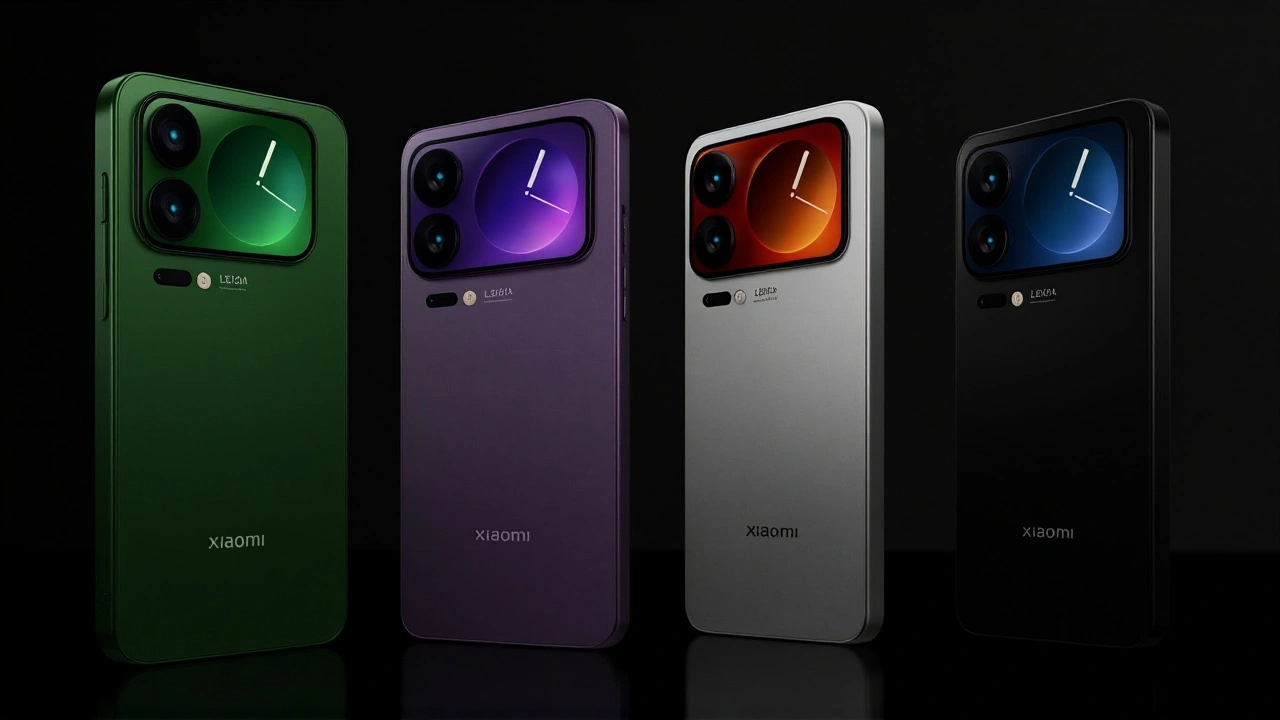
Hints about the next flagship surfaced shortly after the sales announcement. A reliable Chinese tipster, Digital Chat Station, leaked a camera spec sheet on October 10, 2025. According to the document, the Xiaomi 17 Ultra will feature a quad‑camera system: a 200 MP primary sensor plus three 50 MP lenses (ultra‑wide, telephoto, and periscope). The periscope is said to employ a new optical design that pushes optical zoom to 15× without sacrificing sharpness.
Certification filings with TENAA revealed two model numbers – 2512BPNDAC and 25128PNA1C – suggesting a December 2025 launch in mainland China. Both variants share the same sensor suite, but the higher‑priced version will include “revolutionary imaging features” such as on‑chip AI‑enhanced night mode and a proprietary RAW capture pipeline.
Beyond the cameras, rumors point to satellite texting and voice capabilities, echoing Samsung’s recent rollout of its “Emergency Satellite Service.” If true, Xiaomi would be the first Chinese OEM to bundle that functionality into a consumer flagship.
Globally, the Ultra is expected to make its debut at Mobile World CongressBarcelona in February 2026, following the company’s usual pattern of a domestic launch followed by an international showcase.
Market Impact and Analyst Takeaways
Investors reacted positively to the sales surge. Xiaomi’s shares rose 3.2 % on the Shanghai Stock Exchange the day after the announcement, closing at CNY 32.78 per share. IDC predicts that the 17 series will push Xiaomi’s global smartphone shipments past 100 million units for the 2025 calendar year, positioning the firm just behind Samsung and Apple.
However, not everyone is cheering. Some supply‑chain experts warn that the rapid production ramp‑up could strain Qualcomm’s 8 Elite wafer output, potentially leading to a short‑term bottleneck for other OEMs. “We’re seeing a classic case of demand outpacing the fab capacity for a brand‑new silicon node,” noted Chen Li, senior analyst at TrendForce.
From a consumer‑experience perspective, the combination of a massive battery, ultra‑fast charging, and the rear‑display novelty seems to have struck a chord with power‑users and tech enthusiasts alike. Early adopters report that the phone feels “future‑proof” even three months after purchase, especially when paired with Xiaomi’s HyperOS 3, which introduces deeper AI integration for system‑wide energy management.
What’s Next for Xiaomi?
With the Ultra teasing a December debut, Xiaomi’s development pipeline looks packed. The company has hinted at a “mid‑year” refresh of the 17 Pro Max, likely to introduce a higher‑capacity 8 000 mAh battery and a refined version of the rear‑display that can show animated GIFs.
Meanwhile, Xiaomi’s overseas expansion plans remain aggressive. The firm aims to double its European market share by the end of 2026, using the Ultra’s advanced camera suite as a flagship selling point against established players.
Frequently Asked Questions
How does the Xiaomi 17 series compare to the previous generation?
The 17 lineup ships with the Snapdragon 8 Elite Gen 5, offers larger batteries (7 000 mAh vs. 6 500 mAh), and reintroduces the rear‑display on the Pro models. Sales data shows a 20 % YoY increase, indicating a stronger market response than the 16 series.
What are the key camera upgrades in the upcoming Xiaomi 17 Ultra?
The Ultra will feature a 200 MP main sensor and three 50 MP supporting lenses, including a new periscope module that promises up to 15× optical zoom. AI‑enhanced night mode and a proprietary RAW pipeline are also slated to debut.
Will the rear‑display be available on all future Xiaomi flagships?
Xiaomi has said the feature will become a staple on its premium line‑up, but the base model of the 17 series skips it to keep costs down. Industry leaks suggest the Ultra will also include a refined version of the rear‑display.
When can global customers expect the Xiaomi 17 Ultra?
The Ultra is slated for a domestic launch in December 2025, with a global roll‑out at Mobile World Congress in Barcelona in February 2026, followed by phased releases across Europe and Asia.
How might the sales success of the 17 series affect Xiaomi’s stock?
Analysts predict a modest boost to Xiaomi’s market cap, with the share price already up 3 % after the milestone. Continued strong demand could accelerate the company’s goal to exceed 100 million units shipped in 2025.
19 Comments
Look, it's not just about how many phones you can sell in a week-it's about the waste we keep churning out. 😒 Every time a brand pulls a new gimmick like a rear‑display, you see a spike in hype, not sustainability. People love the flash, but the planet doesn't care about your insta‑likes. If we keep rewarding this throwaway culture, we’ll be digging our own graves. 🌍
Another overpriced gimmick, same old story :P
From a systems‑architecture perspective, the Snapdragon 8 Elite Gen 5 offers a marginal 12 % GPU uplift, which translates into a roughly 4 % real‑world FPS gain in most Android titles. The silicon‑carbon battery chemistry also reduces internal resistance, yielding a 5‑6 % increase in charge acceptance rates under 100 W HyperCharge. However, the secondary rear‑display introduces an additional PCB layer, potentially degrading signal integrity for the NFC antenna. In terms of camera throughput, the periscope's 15× optical zoom will likely demand a higher‑resolution sensor stack to avoid diffraction‑limited artifacts. Overall, the spec sheet reads like a checklist for incremental differentiation rather than a paradigm shift.
Wow, a million units in just seven days-this is the kind of milestone that makes you want to jump out of your seat and shout! 🚀 Xiaomi just proved that bold design choices, like the full‑width rear‑display, can actually capture the imagination of power users. The battery life numbers feel like they've been ripped from a sci‑fi novel, and the fast‑charge is practically a superpower. If this momentum keeps up, the upcoming Ultra could set the bar so high that competitors will be scrambling to keep up. I can already hear the hype building across forums, and it's electric!
I'm impressed by the rapid uptake, but it's worth remembering that production ramps can mask underlying supply chain strains. The Snapdragon 8 Elite Gen 5 is a solid upgrade, yet its real‑world impact depends on software optimization. Some users might find the rear‑display a neat novelty, while others could see it as an unnecessary extra cost. Overall, the 17 series seems to strike a decent balance between performance and price, at least for the Chinese market. It'll be interesting to see how it fares once it reaches Europe and the US.
Indeed, the market response underscores the effectiveness of Xiaomi's strategic positioning. By aligning high‑end specifications with a competitive price point, the company has managed to attract a broad segment of consumers seeking value without compromising on performance. The incorporation of a 7,500 mAh battery and 100 W HyperCharge further differentiates the lineup in a crowded flagship arena. Moreover, the company's commitment to iterative innovation-evidenced by the upcoming Ultra-demonstrates a forward‑looking vision that could sustain its momentum. While supply‑chain constraints remain a legitimate concern, proactive collaboration with Qualcomm and component manufacturers may mitigate potential bottlenecks. In addition, the broader ecosystem of HyperOS 3 promises software enhancements that can fully leverage the hardware capabilities. As such, investors and enthusiasts alike have reasonable grounds to maintain optimism regarding Xiaomi's trajectory. Ultimately, the blend of aggressive engineering and market‑savvy pricing appears poised to reinforce Xiaomi's foothold in the premium segment.
While the specs are undeniably impressive, the reliance on gimmicky features like the rear‑display feels like a distraction from core performance improvements. The incremental AI acceleration is useful, yet it doesn’t radically change the user experience. For a flagship price, I would have expected a more substantial leap in battery efficiency rather than just a larger capacity.
Huge sales numbers don’t necessarily equate to lasting satisfaction; early adopters will soon reveal any hidden flaws.
For anyone curious about the battery tech, the silicon‑carbon composite used in the 7,000 mAh cell offers lower thermal rise compared to traditional lithium‑polymer, which helps maintain fast‑charge rates without overheating. Additionally, the Snapdragon’s integrated AI engine can dynamically adjust power draw based on usage patterns, extending real‑world endurance by roughly 10‑15 % in typical day‑to‑day scenarios. Pair that with HyperOS 3’s background app throttling and you get a phone that can comfortably last two full days of video streaming on a single charge.
Honestly, the hype around the rear‑display seems overblown-most people will never notice it in daily use.
It's understandable why some might dismiss the rear‑display as a mere novelty, yet a deeper look reveals several practical advantages that merit consideration. First, the secondary screen provides instant access to notifications without waking the main display, which can shave off several seconds of boot‑up time each day. Second, by delegating glanceable information-such as time, weather, or incoming messages-to the rear panel, the primary OLED can stay in a low‑power state longer, contributing to overall energy savings. Third, users who frequently take photos appreciate the live‑preview feature that mirrors the front‑camera view, reducing the need to flip the device and potentially minimizing accidental touches. Moreover, the expanded rear interface opens up possibilities for customizable shortcuts, like toggling silent mode or activating the AI camera mode with a simple tap. From an ergonomic standpoint, the added surface area can serve as a tactile reference point, helping users orient the device in low‑light environments. It's also worth noting that the engineering challenge of integrating an additional display has pushed Xiaomi's manufacturing processes forward, which could lower costs for future models that adopt similar technology. While the initial implementation may seem extravagant, economies of scale and iterative design refinements are likely to make it more accessible over time. In terms of resale value, devices featuring unique hardware often retain higher demand among enthusiasts seeking differentiated experiences. Additionally, the presence of the rear‑display signals a broader industry trend toward multi‑modal interaction, encouraging app developers to innovate new use cases. For example, messaging apps could display unread counts directly on the backside, allowing quick triage without unlocking the phone. Some users have reported a measurable reduction in accidental pocket taps, which not only preserves battery life but also prevents unintended actions. The psychological benefit of having information at a glance can also reduce the perceived need to constantly check the phone, potentially encouraging healthier usage habits. Finally, embracing such features demonstrates a willingness to experiment beyond conventional design norms, fostering a culture of creativity within the smartphone ecosystem. In sum, while the rear‑display may not be essential for everyone, its functional merits and forward‑looking potential deserve a more nuanced assessment than outright dismissal.
Sure, let's all bow to the 'visionary' that thinks a tiny screen on the back magically solves everything-next they'll be selling phones with Wi‑Fi that actually works.
Actually, the silicon‑carbon battery’s lower internal resistance is only a marginal improvement; real‑world endurance still hinges on software throttling, which many OEMs still mess up.
Great to see the numbers, but remember that sustainable growth also depends on after‑sales support and timely software updates-something that keeps users loyal in the long run.
yeah i think u r right bout support, but wut about price? 17 series still sounds pricey for many.
The pricing strategy aligns with Xiaomi's premium positioning; while it may appear steep compared to mid‑range offerings, the value proposition includes cutting‑edge components that justify the cost for power users.
We should pause and ask ourselves whether chasing the next flagship ever truly serves humanity, or if it merely fuels a perpetual cycle of consumption that damages our planet.
While your concern is noble, the reality is that technological progress drives economic development, and without innovation, societies stagnate-so the balance lies in responsible manufacturing, not in halting advancement.
Don't be fooled-these sales spikes are often engineered by hidden groups pushing backdoor firmware that leaks data to unknown entities.