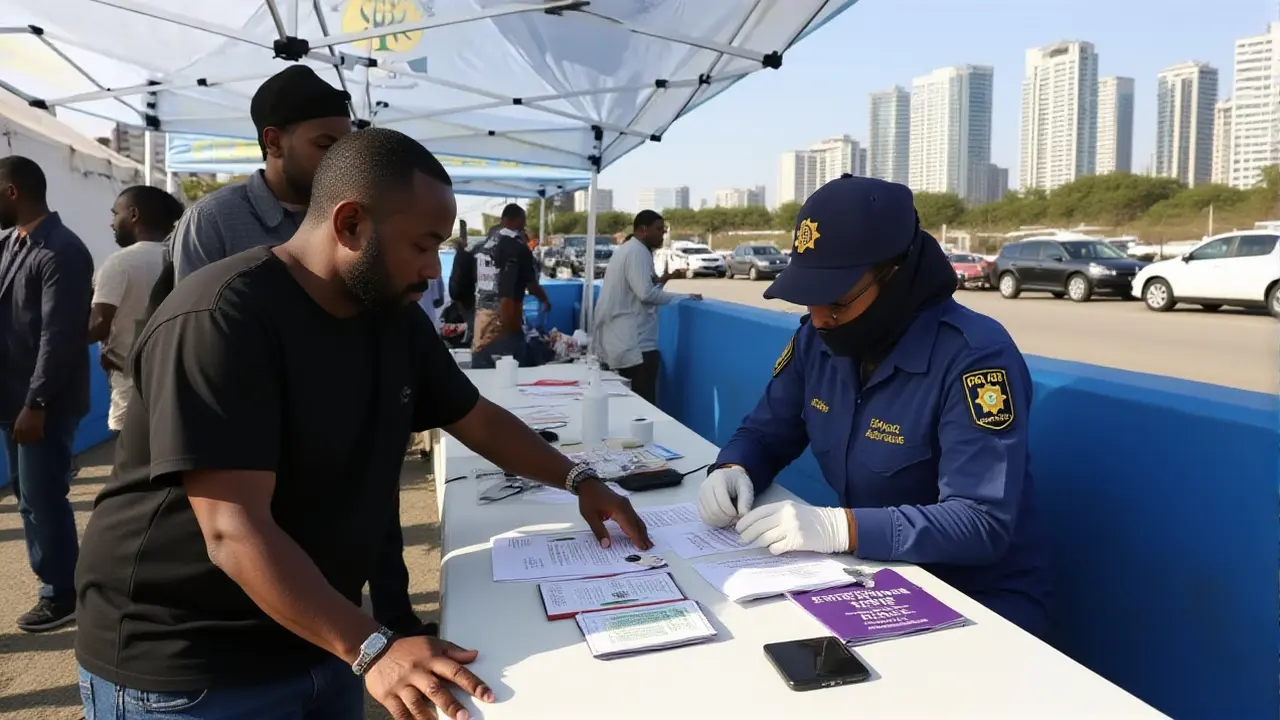
The clock is ticking toward a potentially explosive deadline in South Africa. As of Tuesday, 30 June 2026, anti-immigrant groups have issued an ultimatum: undocumented migrants must leave the country or face severe consequences. This isn't just political posturing; it’s a threat that has already sparked violence, destroyed homes, and forced thousands to flee. At the center of this storm is Cyril Ramaphosa, President of the Republic of South Africa, who finds himself accused by critics of failing to lead while trying to balance strict enforcement with constitutional rights.
Here’s the thing: the tension didn’t appear overnight. For months, frustration over unemployment, crime, and strained public services has boiled over into open hostility toward foreign nationals. Now, with major cities on edge and security forces on high alert, the nation is holding its breath. Will 30 June be a day of civil unrest reminiscent of the deadly 2021 riots? Or will the government’s new crackdown measures hold the line?
A Deadline That Could Spark Chaos
The movement behind this pressure campaign is led by groups like Operation Dudula and March and March. Their slogan, "Mabahambe" (Zulu for "They must go"), has become a rallying cry at street-level protests across Gauteng, KwaZulu-Natal, and beyond. These groups argue that illegal immigrants are responsible for skyrocketing crime rates, taking jobs from locals, and decaying urban infrastructure.
But the stakes are lethal. In Mossel Bay, arson attacks recently destroyed more than 50 homes, killing at least two Mozambican nationals. Reports emerged of a Malawian man being stoned to death. Thousands of African migrants have since fled to temporary shelters or sought repatriation through their home governments. Nigeria and Zimbabwe have already begun bringing citizens back due to safety concerns. The atmosphere is thick with fear, and the threat of a "massive national shutdown" looms if the government doesn’t meet the protesters' demands for a structural overhaul of immigration policy.
Ramaphosa’s Five-Point Crackdown
In response, President Ramaphosa delivered a nationally televised address from the Union Buildings in Pretoria on Sunday evening, 7 June 2026. He acknowledged the pain points: yes, illegal immigration affects service delivery; yes, there is corruption within the system; and yes, organized crime exploits these gaps. But he drew a hard line against vigilantism.
"Only authorized government personnel may act against violations of the law," Ramaphosa stated firmly. He warned that no individual or group had the right to demand proof of nationality on the streets. To back up his words, he announced a sweeping five-pillar plan:
- Intensified enforcement of immigration and labor laws.
- Stronger border controls to prevent irregular entry.
- Stamping out corruption within the Department of Home Affairs.
- Closing legal loopholes in immigration policies.
- Improved cooperation with other African nations.
Perhaps the most significant announcement was the establishment of dedicated immigration courts to speed up deportations. The government also revealed that the Border Management Authority had intercepted over 450,000 people attempting illegal entry in the past year alone. Additionally, a task team dubbed "Operation New Broom" has apprehended 40,000 individuals in 2026, often targeting informal shops seen as hotspots for illegal activity.
The Human Cost and Political Fallout
While the statistics paint a picture of aggressive state action, the human toll is stark. Civil society organizations like the International Commission of Jurists and Lawyers for Human Rights have welcomed Ramaphosa’s condemnation of xenophobia but criticized the administration for validating the core premise of the anti-migrant mobs—that irregular migration drives social instability.
"The ball is in Ramaphosa's court," wrote one opinion piece in Independent Online. Critics argue that telling frustrated citizens to "stand down" without offering immediate, tangible solutions is inadequate. With an unemployment rate exceeding 30%, many South Africans feel economically squeezed. A 2025 survey by the Human Sciences Research Council found that only 15% of adults would welcome all foreigners, while 42% said they would welcome none. Attitudes have hardened particularly among working-class communities in provinces like Mpumalanga and Limpopo.
Opposition parties, including ActionSA, have joined the chorus demanding stricter laws, further complicating the political landscape. Meanwhile, migrant communities live in terror, unsure if state protection will outweigh the vigilante threats.
What Happens After June 30?
As the deadline approaches, the government has deployed police and military forces to safeguard critical infrastructure. Ramaphosa insists that security forces are ready to ensure 30 June becomes a "normal day." Yet, the risk remains high. If protests turn violent, the country could see a repeat of the chaos witnessed in July 2021, which left dozens dead and billions in damages.
The coming weeks will test not just the resilience of South Africa’s democratic institutions, but the empathy of its citizenry. Can the state enforce borders without inciting hatred? Can leaders address legitimate economic grievances without scapegoating vulnerable populations? The answers will define the nation’s trajectory for years to come.
Frequently Asked Questions
What is the significance of the 30 June 2026 deadline?
The 30 June 2026 date is an ultimatum set by anti-immigrant groups like March and March and Operation Dudula, demanding that all undocumented foreign nationals leave South Africa. Failure to comply threatens massive nationwide protests and potential violence, creating a tense standoff between civil society activists and the government.
How is the government responding to the crisis?
President Cyril Ramaphosa announced a five-point plan including intensified border controls, new immigration courts to expedite deportations, and stricter penalties for employers hiring undocumented workers. He also condemned vigilantism, stating that only state authorities can enforce immigration laws.
What role do Operation Dudula and March and March play?
These are prominent anti-immigrant movements that organize street-level checks, demand identification from foreigners, and protest outside businesses and government buildings. They argue that illegal immigrants strain public services and increase crime, though their methods have been linked to violence and intimidation.
Is xenophobia rising in South Africa?
Surveys indicate a hardening of attitudes, with 42% of adults saying they would welcome no immigrants. While the government denies the country is inherently xenophobic, incidents of violence against foreign nationals, such as the arson attacks in Mossel Bay, suggest deep-seated tensions fueled by economic anxiety and political rhetoric.
What are the risks of the upcoming protests?
There is a significant risk of widespread unrest, property destruction, and loss of life similar to the 2021 riots. Anti-migrant groups have threatened a national shutdown, and while security forces are deployed, the potential for clashes between protesters, migrants, and police remains high.