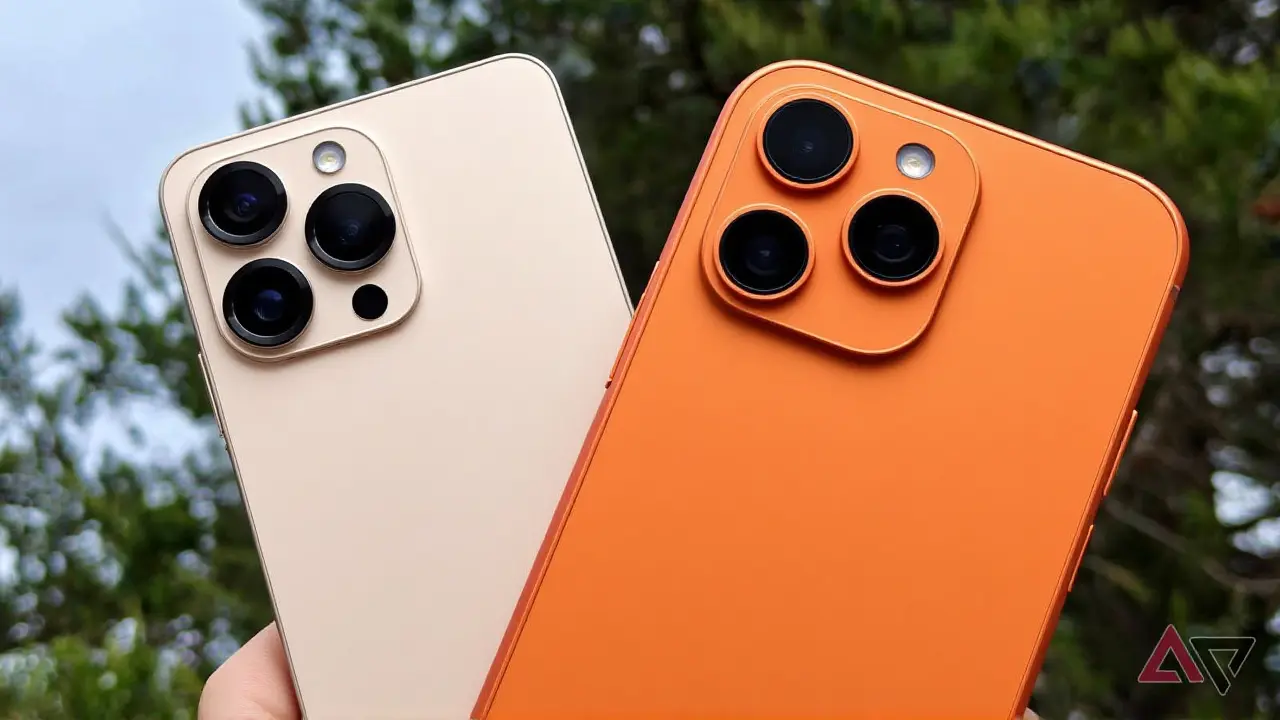
Forget the endless debates about which ecosystem is superior. After spending weeks with both devices, tech journalists have reached a surprising consensus: there is no clear winner between the Samsung Galaxy S25 Ultra and the Apple iPhone 17 Pro Max. In a candid assessment published on November 6, 2025, Android Police declared they were "done pretending one is clearly better," signaling a shift in how we evaluate flagship smartphones.
The rivalry has defined mobile tech for years, but this year’s contenders are neck-and-neck in ways that frustrate purists of both camps. Released just months apart—the Samsung in February and the Apple in September—these phones represent the peak of current engineering. Yet, instead of a decisive knockout, users are finding themselves choosing based on subtle preferences rather than objective superiority.
The Display and Design Showdown
Here’s the thing: when you hold these two slabs of glass and metal, the differences feel smaller than the spec sheets suggest. Both feature massive 6.9-inch screens, but the technology underneath tells a different story. The Samsung Galaxy S25 Ultra boasts a Dynamic AMOLED panel with a resolution of 3120×1440 pixels, hitting a pixel density of 498 ppi. It’s gorgeous, sharp, and vibrant.
But wait—the iPhone 17 Pro Max counters with its Super Retina XDR OLED display. While it has a slightly lower resolution (2868×1320) and pixel density (458 ppi), it achieves a higher peak brightness of 3,000 nits compared to Samsung’s 2,600 nits. In bright sunlight, that extra wattage matters. One reviewer noted that while the Samsung screen feels richer in color depth, the iPhone’s brightness gives it an edge in outdoor visibility.
Design-wise, the weight difference is noticeable. The Samsung weighs 218 grams, while the iPhone tips the scales at 233 grams. That 15-gram gap might sound trivial, but after hours of one-handed use, it adds up. The YouTube review channel highlighted that the Samsung is "easier to hold and lift," whereas the iPhone’s new design changes—described by ZDNET as "contentious"—make it feel bulkier despite similar dimensions.
Camera Systems: Quantity vs. Consistency
If you’re buying a phone for photography, the choice gets tricky. The Samsung Galaxy S25 Ultra packs a quad-camera system headlined by a massive 200-megapixel main sensor. It also includes a 50MP ultrawide, a 10MP 3x telephoto, and another 50MP 5x optical zoom lens. This setup offers incredible versatility, especially for zooming into distant subjects without losing detail.
The iPhone 17 Pro Max takes a different approach. Its triple-camera system features three 48-megapixel lenses. Yes, all three. This uniformity allows for seamless switching between wide, ultra-wide, and telephoto modes without significant quality drops. AT&T’s device portal notes the inclusion of second-generation sensor-shift optical image stabilization and 100% Focus Pixels, which help in low-light scenarios.
Turns out, neither system is universally "better." If you love zooming or editing photos later, the Samsung’s high-res sensors win. If you prefer point-and-shoot reliability and video consistency, the iPhone’s processing pipeline remains hard to beat. As one expert put it, "The Samsung gives you more tools; the iPhone makes sure every tool works perfectly out of the box."
Performance and Battery Life Reality Check
Under the hood, the competition is fierce. The Samsung runs on the Snapdragon 8 Elite chipset with 12GB of RAM, clocked at 4.47 GHz. The iPhone relies on Apple’s A19 Pro chip, running at 4.26 GHz. On paper, Samsung looks faster. But benchmarks don’t always reflect real-world usage.
In single-core performance tests, the A19 Pro actually bests the Snapdragon 8 Elite by a "good margin," according to independent reviews. For everyday tasks like scrolling, app switching, and social media, both phones feel instantaneous. You won’t notice a lag spike on either device unless you’re pushing them to their absolute limits with heavy gaming or video rendering.
Battery life is where the narrative shifts again. The Samsung has a 5,000 mAh battery, while the iPhone has a slightly larger 5,088 mAh cell. Android Police reported getting "well into a second day" with the Samsung, but admitted the iPhone "slightly edges out" the Galaxy in overall efficiency. The twist? The iPhone’s optimized iOS 26 manages power so effectively that the smaller physical battery doesn’t matter much. Meanwhile, Samsung’s One UI 8 brings new AI-driven processing that helps conserve energy, keeping the gap narrow.
Pricing and Market Positioning
Let’s talk money, because that’s often the tie-breaker. Pricing varies wildly depending on storage and region. Smartprix lists the lowest found price for the Samsung Galaxy S25 Ultra at $879.99, while the iPhone 17 Pro Max starts at $1,199. However, Pocket-lint cites starting MSRP prices of $1,300 for the Samsung and $1,200 for the iPhone in the US market.
Here’s the kicker: if you want maximum storage, Apple charges a premium. How-To Geek points out that the 2TB iPhone 17 Pro Max costs a staggering $1,999. In contrast, the Samsung maxes out at 1TB. For most users, 256GB or 512GB is plenty, making the base models the sweet spot. Interestingly, resale value favors Apple. Pocket-lint notes that thieves increasingly target iPhones because they retain higher resale value, a testament to the brand’s enduring demand.
What’s Next for Flagship Phones?
The convergence of these two titans suggests a maturing market. We’re past the era of dramatic leaps in innovation. Instead, we’re seeing refinements: brighter screens, smarter cameras, and longer software support. Samsung promises up to seven OS updates for the S25 Ultra, matching Apple’s traditionally long support cycle.
As we move into late 2025 and early 2026, the debate will likely continue online, fueled by social media posts and detailed reviews. But for consumers, the message is clear: pick the ecosystem you already live in. Whether it’s the customization of Android 15 or the seamless integration of iOS 26, both phones are exceptional. The only wrong choice is waiting for a perfect phone that doesn’t exist.
Frequently Asked Questions
Which phone has better battery life, Samsung S25 Ultra or iPhone 17 Pro Max?
Both phones offer excellent battery endurance, easily lasting a full day of heavy use. The Samsung Galaxy S25 Ultra has a 5,000 mAh battery, while the iPhone 17 Pro Max has a slightly larger 5,088 mAh battery. Reviewers note that the iPhone slightly edges out the Samsung in efficiency due to iOS optimization, but the difference is marginal in real-world scenarios.
Is the Samsung Galaxy S25 Ultra cheaper than the iPhone 17 Pro Max?
Pricing varies by retailer and storage configuration. Generally, the Samsung Galaxy S25 Ultra can be found for as low as $879.99, while the iPhone 17 Pro Max starts around $1,199 to $1,200. However, standard MSRP comparisons sometimes show the Samsung at $1,300 and the iPhone at $1,200, making them very close in cost for base models.
Which camera system is better for zoom photography?
The Samsung Galaxy S25 Ultra is superior for zoom photography. It features a quad-camera system including a 50MP sensor with 5x optical zoom and a 10MP 3x telephoto lens. The iPhone 17 Pro Max has a triple 48MP system but lacks the same level of dedicated high-zoom hardware, making Samsung the better choice for capturing distant subjects.
Do these phones support long-term software updates?
Yes. Samsung has committed to providing up to seven major OS updates for the Galaxy S25 Ultra, running Android 15. Apple typically supports iPhones for five to seven years with iOS updates, ensuring the iPhone 17 Pro Max will receive security patches and feature enhancements well into the future.
Why do reviewers say neither phone is clearly better?
Reviewers conclude that both devices excel in different areas. The Samsung offers better zoom capabilities, a lighter design, and more customization via Android. The iPhone provides superior video recording, higher peak screen brightness, and better resale value. Since performance and battery life are nearly identical, the choice depends on personal preference rather than objective superiority.