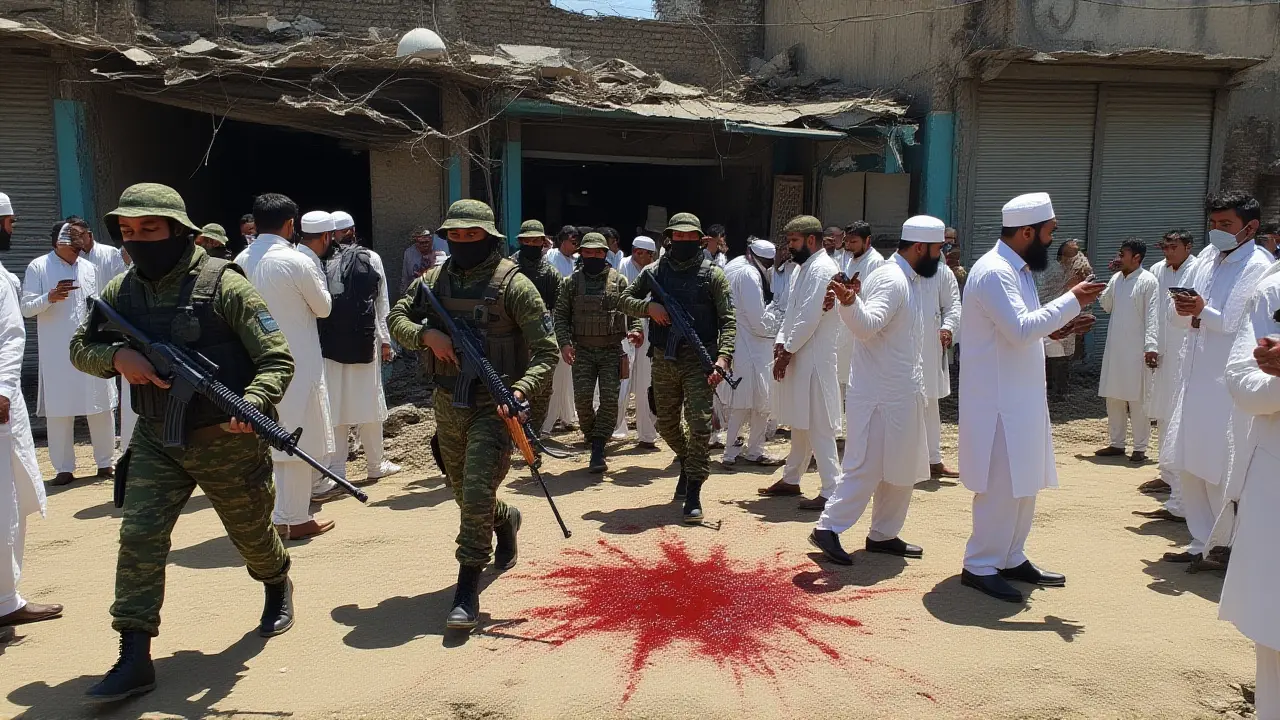
The situation along the Afghanistan-Pakistan border has deteriorated sharply, with reports confirming that 12 Pakistani soldiers were killed during a fierce exchange of fire. This isn't just another skirmish; it’s a significant escalation involving direct ground attacks by Afghan forces on military outposts.
The clashes erupted along the Durand Line, the porous and historically contested frontier separating the two nations. According to initial accounts, fighters associated with the Taliban launched retaliatory strikes against Pakistani army posts. The timing is particularly tense, occurring while Amrullah Saleh Muttaqi, Afghan Foreign Minister, was engaged in diplomatic talks in India.
Here’s the thing: this violence didn’t happen in a vacuum. It follows a clear cause-and-effect chain triggered by recent Pakistani air operations. Islamabad had conducted airstrikes targeting leaders of the Tehrik-i-Taliban Pakistan (TTP), an insurgent group based in Afghanistan but operating primarily within Pakistan. Kabul viewed these strikes as violations of its sovereignty, leading to this immediate and bloody response.
A Cycle of Retaliation
To understand why tensions flared so quickly, you have to look at the trigger. In recent weeks, the Pakistan Army intensified cross-border drone and missile strikes aimed at dismantling TTP leadership networks. These operations are part of Islamabad’s long-standing strategy to neutralize threats originating from safe havens across the border.
But wait—the Taliban government in Kabul sees things differently. They argue that allowing foreign powers to strike inside their territory undermines their authority. When news broke of the latest airstrikes, the reaction wasn’t just verbal condemnation. Instead, Taliban-aligned forces moved on the ground. Reports indicate they attacked several fortified positions, engaging Pakistani troops in close-quarters combat.
The result? A heavy toll for the Pakistani side. Twelve confirmed deaths is a significant figure for a single engagement. While the Taliban claimed operational success—stating they captured "several outposts" and destroyed military hardware—Pakistani officials have not yet fully verified these territorial gains. What is certain is the intensity of the fighting, which suggests both sides were prepared for a major confrontation.
Diplomatic Timing Adds Complexity
Oddly enough, this bloodshed coincided with a high-level diplomatic visit. Amrullah Saleh Muttaqi was in New Delhi meeting with Indian counterparts. The overlap between kinetic violence on one border and diplomatic outreach on another signals shifting regional dynamics.
Why does this matter? Because it highlights the delicate balancing act Afghanistan is attempting. On one hand, the Taliban seeks legitimacy and economic ties with neighbors like India. On the other, they feel compelled to respond militarily when they perceive aggression from Pakistan. This dual approach creates uncertainty for regional stability.
Observers note that the clash might be intended as a message to Islamabad: any further incursions will meet with force. Whether this escalates into broader conflict or remains a contained incident depends heavily on how both governments manage the fallout. So far, there’s no indication of a formal ceasefire framework being explicitly threatened, though trust between Kabul and Islamabad is already at historic lows.
The Durand Line: A Flashpoint History
Let’s step back and look at the geography. The Durand Line stretches approximately 2,670 kilometers through rugged mountainous terrain. Established in 1893 during British colonial rule, it divides Pashtun tribal lands between what is now Afghanistan and Pakistan.
Historically, Afghanistan has never formally recognized the border, viewing it as an artificial imposition. This lack of consensus fuels periodic flare-ups. For decades, the region has seen cross-border gunfire, artillery exchanges, and occasional incursions. However, the current dynamic is different because the Taliban now controls the Afghan side, giving them unified command over border security forces.
In previous years, under the former Islamic Republic of Afghanistan, coordination with Pakistan was possible, albeit strained. Now, with the Taliban in power, communication channels are limited. Misunderstandings can escalate rapidly, as evidenced by this latest clash. The presence of militant groups like the TTP further complicates matters, creating a three-way tension between state actors and non-state insurgents.
What Happens Next?
The immediate future looks precarious. Both sides are likely assessing their losses and political options. Pakistan may face domestic pressure to respond forcefully to the deaths of its soldiers. Meanwhile, the Taliban must weigh the cost of continued confrontation against their desire for international recognition.
Experts suggest that without renewed dialogue, the cycle of retaliation could continue. Each airstrike invites a ground attack; each ground attack invites more airstrikes. Breaking this loop requires de-escalation measures that neither side currently seems willing to prioritize. For now, the region watches closely, hoping this deadly episode doesn’t mark the start of a wider war.
Frequently Asked Questions
Who started the latest border clash?
The immediate trigger was Pakistani airstrikes targeting TTP leaders inside Afghanistan. In retaliation, Taliban-aligned forces launched ground attacks on Pakistani army posts, resulting in the deaths of 12 Pakistani soldiers. Both sides view their actions as justified responses to perceived provocations.
What is the TTP's role in this conflict?
The Tehrik-i-Taliban Pakistan (TTP) is an insurgent group based in Afghanistan that conducts attacks within Pakistan. Pakistan accuses the Afghan Taliban of harboring TTP members. The recent Pakistani airstrikes targeted TTP leadership, which directly provoked the Taliban's military response along the border.
Why is the Durand Line so controversial?
The Durand Line, established in 1893, divides Pashtun territories between Afghanistan and Pakistan. Afghanistan has historically refused to recognize it as a legitimate international border, viewing it as a colonial artifact. This unresolved dispute leads to frequent security incidents and makes border management extremely difficult.
How does the Afghan Foreign Minister's visit to India relate?
The clash occurred while Foreign Minister Amrullah Saleh Muttaqi was visiting India. Analysts see this timing as significant, suggesting the Taliban may be using military posturing to strengthen its negotiating position or signal sovereignty while pursuing diplomatic ties with other regional powers like India.
Are there any casualties reported on the Afghan side?
Available reports focus on the 12 Pakistani soldiers killed. There is no confirmed data on Afghan or Taliban casualties from this specific engagement. The Taliban claimed to have captured outposts and destroyed equipment, but independent verification of these claims and any associated losses remains unclear.
10 Comments
Oh my gosh!! This is absolutely heartbreaking!!! 😢 The sheer brutality of it all just makes me want to scream into the void!!! Why can't these nations just talk instead of killing each other??? It's a complete mess!!! I feel so drained just reading about this!!! The Durand Line is such a cursed concept!!! 🙁
The geopolitical ramifications are quite severe, indeed. One must consider that the escalation was not random but a calculated response to perceived sovereignty violations. The airstrikes were the catalyst. The ground attack was the consequence. We are witnessing a classic security dilemma unfold in real-time. It is unfortunate, yet predictable.
It is imperative to understand the historical context of the Durand Line before passing judgment on either party. Established during the colonial era, this border has never been accepted by Afghanistan as legitimate. The current conflict is merely the latest manifestation of a century-old dispute. Diplomatic solutions have failed because the foundational issue remains unresolved. Both sides are trapped in a legacy they did not create but must now manage.
Stop whining and look at the facts. Pakistan struck first. Taliban responded. Simple cause and effect. No one cares about your feelings when soldiers die. Move on.
i feel so sad for the families losing their sons. war is always terrible no matter who starts it. the human cost is what matters most here. we should focus on peace not blame.
How delightful that our neighbors are busy destroying each other while we sit back and watch with popcorn. Truly a testament to the incompetence of regional leadership. I suppose this is what you call 'progress'?
man this is heavy stuff. feels like nothing ever changes in that region. just endless cycles of violence. hope things calm down soon though.
it’s all part of the grand design obviously. the west wants chaos there so they can sell more weapons and keep the oil flowing smoothly. nobody talks about how the drones are probably made by the same companies lobbying against sanctions. it’s a blood sport for profit. wake up sheeple.
There is no justification for taking innocent lives. The moral decay of modern politics is evident in every headline. We have lost our way as a global community.
The strategic calculus here is flawed from a kinetic warfare perspective. The TTP operates asymmetrically, meaning conventional border skirmishes do little to degrade their operational capacity. Furthermore, the Taliban's claim of capturing outposts is likely propaganda to bolster domestic legitimacy. The actual tactical gain is negligible compared to the political capital burned. It's a lose-lose scenario driven by ego rather than strategy.