Rapid Support Forces: What They Are and Why They Show Up in News Stories
When you hear Rapid Support Forces, a paramilitary group in Sudan that emerged from the Janjaweed militias and now operates as a key armed force under the Sudanese government. Also known as RSF, it has become one of the most influential—and controversial—military entities in Africa. This isn’t just another militia. It’s a well-funded, heavily armed force that answers directly to Sudan’s top leadership, controls vast territories, and has been linked to some of the worst violence in recent African history.
The Rapid Support Forces didn’t appear out of nowhere. They grew out of the Janjaweed, the Arab nomadic militias used by Sudan’s former president Omar al-Bashir to crush rebellions in Darfur back in the early 2000s. Over time, they were formalized, given uniforms, weapons, and a chain of command. Today, they’re not just soldiers—they’re a state within a state. They run gold mines, control trade routes, and have their own logistics, intelligence networks, and even media outlets. Their leader, Mohamed Hamdan Dagalo, known as Hemedti, is now one of the most powerful men in Sudan, second only to the army chief.
What makes the Rapid Support Forces different from regular armies? They operate with less oversight. While the Sudanese Armed Forces focus on conventional warfare, the RSF thrives in chaos. They’ve been accused of mass killings, sexual violence, and ethnic targeting—especially in Darfur and Khartoum. In 2023, they went head-to-head with the Sudanese military in a brutal civil war that displaced millions and turned cities into rubble. Their tactics? Fast strikes, ambushes, and scorched-earth policies. They don’t need to hold ground for long; they just need to make it unbearable for civilians to stay.
Why do news stories keep bringing them up? Because they’re not just a local issue. Their actions ripple across borders. Refugees flood into Chad and Egypt. Gold mined by RSF-linked operations ends up in global markets. International sanctions target their leaders, but the group keeps moving. Even when peace talks happen, the RSF often shows up as a wildcard—neither fully allied nor fully opposed to anyone. They play the long game.
What you’ll find in the posts below isn’t a single story about the Rapid Support Forces. It’s a collection of headlines where they show up indirectly—through political upheaval, war crimes reports, or even sports events canceled because of the chaos they caused. Some posts mention Sudan’s collapse. Others talk about displaced athletes or blocked competitions. None of them spell out "RSF" in the title, but the shadow of the group is everywhere. This isn’t about politics alone. It’s about how violence reshapes lives, leagues, and entire nations.
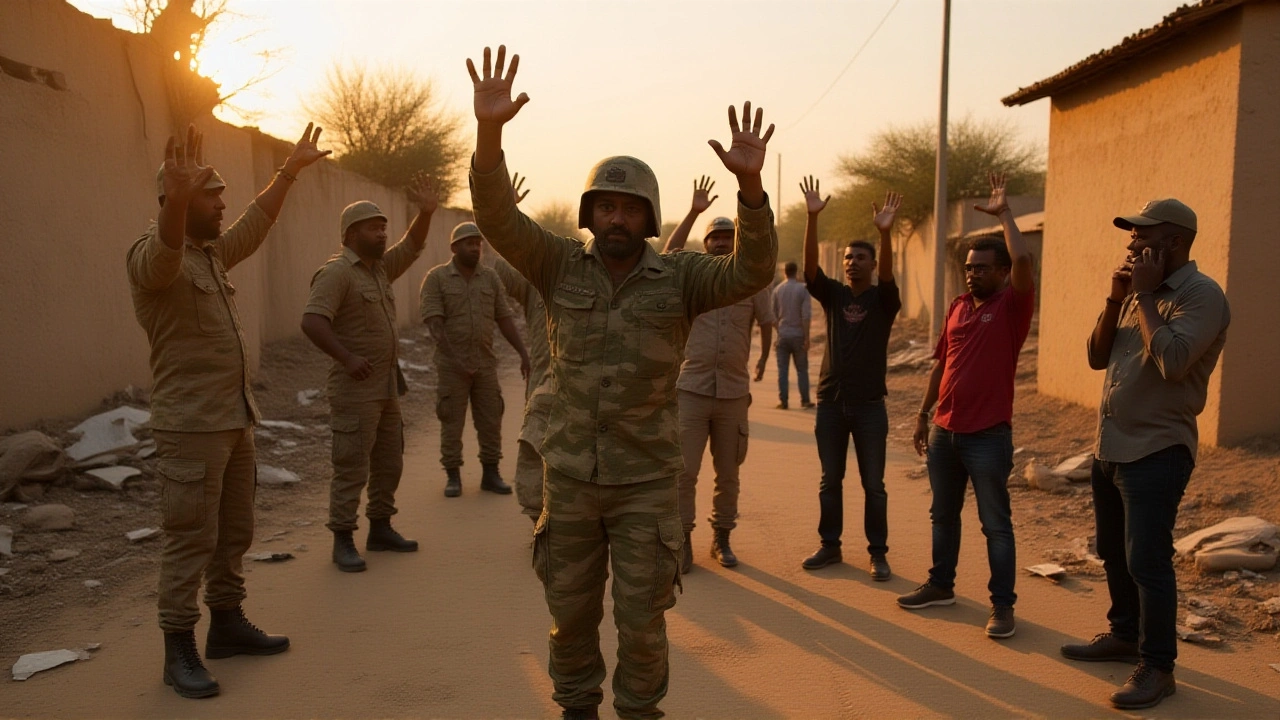
UN Condemns Deadly Drone Strikes on Sudan Nursery and Hospital Killing Dozens of Children
UN condemns deadly drone strikes on a kindergarten and hospital in Kalogi, Sudan, killing up to 114 civilians including 63 children. The RSF and SPLM-N faction are blamed in a war that has displaced over 10 million.