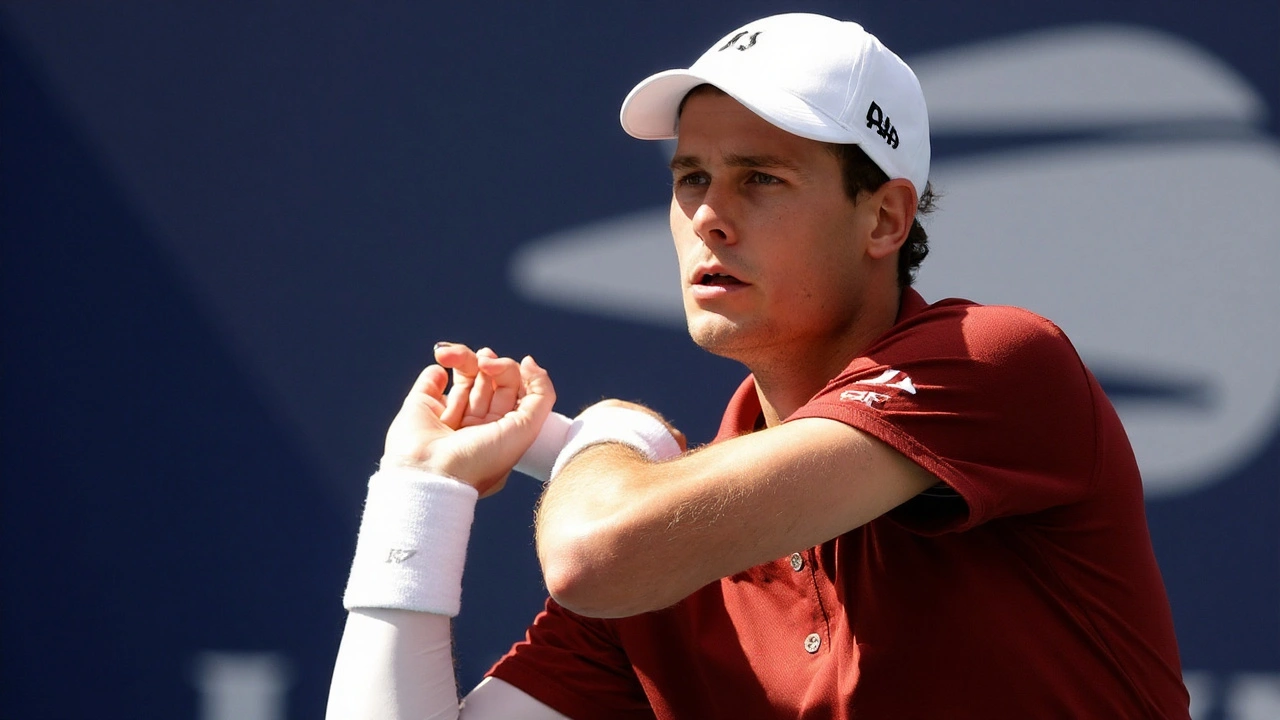
Match Recap: Alcaraz’s Dominant Victory
The Centre Court showdown at Flushing Meadows turned into a showcase of power, poise, and rivalry. Carlos Alcaraz seized the opening set 6‑2, breaking Jannik Sinner early and never looking back. The Italian fought back in the second, using his heavy forehand to edge a 3‑6 win, but the 22‑year‑old Spaniard regrouped and exploded in the third, rattling Sinner 6‑1.
In the deciding set, Alcaraz held his nerve, serving cleanly and converting break points to close out the match 6‑4. The final scoreline—6‑2, 3‑6, 6‑1, 6‑4—reflected the ebb and flow, yet it was Alcaraz who consistently elevated his level when the pressure peaked.
Beyond the numbers, the crowd felt the intensity of a rivalry that has defined 2025. Alcaraz’s victory not only handed him his second US Open crown and sixth Grand Slam overall, it also propelled him back to the top of the ATP rankings, ending Sinner’s 65‑week reign.

Season‑Long Implications and the Rise of a New Era
For Sinner, the loss is bittersweet. The 24‑year‑old Italian became only the fourth man in the Open Era to book a spot in all four major finals in one calendar year—a feat once reserved for legends like Rod Laver, Roger Federer, and Novak Djokovic. He captured the Australian Open and Wimbledon titles, but fell short at Roland Garros and now the US Open.
Speaking after the match, Sinner praised Alcaraz’s composure. “He raised his level when he had to,” Sinner said, acknowledging the Spanish star’s superior handling of clutch moments. Yet he remained optimistic, noting that moving from “hunter” to “chaser” could spark fresh motivation.
The final also marked a turning point for Novak Djokovic. His semifinal defeat to Alcaraz meant that, for only the third year since 2007, he missed a Grand Slam final. At 38, Djokovic still reached all four semifinals—a testament to his longevity—but the emerging clash between Alcaraz and Sinner signals a shift in the sport’s power structure.
Alcaraz’s triumph cements him as the youngest man since Björn Borg to amass six major titles, underscoring his rapid ascent. The rivalry with Sinner has already produced three major finals this year, a first in the Open Era, and promises even more electrifying encounters.
As the season winds down, both players have clear targets: Alcaraz aims to defend his titles and solidify his No. 1 status, while Sinner looks to convert his finals appearances into more trophies. The tennis world watches, aware that this duel is reshaping the narrative of men’s sport for years to come.
US Open 2025 will be remembered not just for the headline‑grabbing win, but for the deeper story of two young champions rewriting the record books and challenging the long‑standing dominance of a legend.
14 Comments
What an incredible display of composure from Alcaraz – he really set the tone early and showed why he deserves the top spot. It’s great to see such sportsmanship and skill on display, and I think fans around the world will appreciate the way both players pushed each other to new heights.
i cant even begin to describe the feels of that third set, alcaraz was like a wave that just kept crashing over sinner, totally mind blowing.
Honestly, the match was a textbook example of tactical superiority. Alcaraz exploited Sinner’s backhand weaknesses and maintained relentless pressure, leaving the Italian with no room to breathe. It’s almost surgical the way he timed his break points.
Wow, that match was 🔥! Alcaraz came out swinging and never looked back. Love seeing a new generation dominate! 🎾💪
These so‑called “young talents” are just pawns in the grand conspiracy of the tennis elite. They’re being groomed to keep the old guard in power while pretending to rewrite history. Wake up, people!
Alcaraz’s performance at the 2025 US Open can be viewed as a pivotal moment in the evolution of modern tennis, marking a clear departure from the era dominated by a handful of seasoned veterans and heralding the ascendancy of a new generation of athletes whose gameplay is characterized by a blend of raw power, strategic ingenuity, and unparalleled mental resilience. The opening set, a decisive 6‑2, demonstrated his ability to impose his rhythm early, capitalizing on Sinner’s tentative footwork and extracting short balls that he could finish with surgical precision. In the second set, the Italian’s resurgence to a 3‑6 victory highlighted his adaptability and the depth of his forehand arsenal, temporarily shifting the momentum and forcing Alcaraz to reassess his tactical approach. However, the third set was nothing short of a masterclass; Alcariz accelerated his first‑serve percentage to over 80%, broke serve twice, and then proceeded to dominate with a 6‑1 surge that left the crowd in awe. The decisive fourth set, culminating in a 6‑4 finish, displayed his composure under pressure, as he converted crucial break points with calmness that belied his age, ultimately securing the championship and reclaiming the world number one ranking. This victory not only adds a second US Open title to his résumé but also positions him as the youngest player since Björn Borg to capture six Grand Slam crowns, a testament to his rapid development and consistent high‑level performance. Moreover, the match underscores the shifting power dynamics within men’s tennis, as the long‑standing dominance of Novak Djokovic wanes, making room for fresh rivalries that capture the imagination of fans worldwide. The implications for the remainder of the season are profound: Alcaraz now possesses the confidence and momentum to defend his titles across the remaining majors, while Sinner, despite his loss, has secured a historic place as one of the few players to reach all four Grand Slam finals within a single calendar year. Their ongoing duel promises to be a defining narrative for the sport, potentially reshaping rankings, sponsorships, and the very perception of competitive tennis in the years to come.
Totally agree.
Great insight, man. Alcaraz’s consistency is exactly what a coach would love to point out to upcoming players, showing them the importance of staying aggressive yet patient.
The match statistics reveal a significant increase in first‑serve effectiveness for Alcaraz compared to previous Grand Slams, indicating a strategic adjustment that paid dividends in high‑pressure moments.
While the data is informative, the real story lies in Alcaraz’s psychological edge, which he leveraged to dominate the crucial points.
From a performance analytics perspective, Alcaraz demonstrated a high‑efficiency conversion rate on break points, leveraging a first‑serve win percentage that exceeded the 70% threshold-a key metric for match profitability.
It's encouraging to see such a strong showing from a player who has been consistently improving his return game; this match will likely serve as a case study for future development programs.
What a thrilling final! Alcaraz’s energy was infectious and really pumped up the entire arena-can’t wait to see what's next!
Seeing the crowd’s reaction to every rally was fascinating; it’s clear that the sport’s popularity is climbing as more fans get drawn to these intense battles.